
If you have high blood pressure, you may be worried about your PCV medical. You might wonder if you will pass the medical or be able to renew your bus or coach driving licence. The good news is that high blood pressure does not automatically mean you will fail your PCV medical.
High blood pressure can sometimes affect your ability to drive a bus or coach. This can mean that you have to stop driving and inform the DVLA. Follow your doctor’s advice and make sure you understand what to expect at your appointment.
This guide explains how high blood pressure and PCV medical requirements are assessed. It also covers what happens if your reading is too high and how you can prepare for your appointment.
High Blood Pressure and PCV Medical: Can You Drive a Bus?
You may still be able to drive a bus if you have high blood pressure. However, you must meet the DVLA medical standards and other licensing requirements.
High blood pressure and PCV licence requirements are closely linked because the DVLA assesses whether your BP meets the medical standards for Group 2 drivers. Having hypertension does not automatically mean you will fail your PCV medical. Many people manage their condition with prescribed medication and regular medical monitoring.
What Are the DVLA High Blood Pressure Group 2 Licence Requirements?
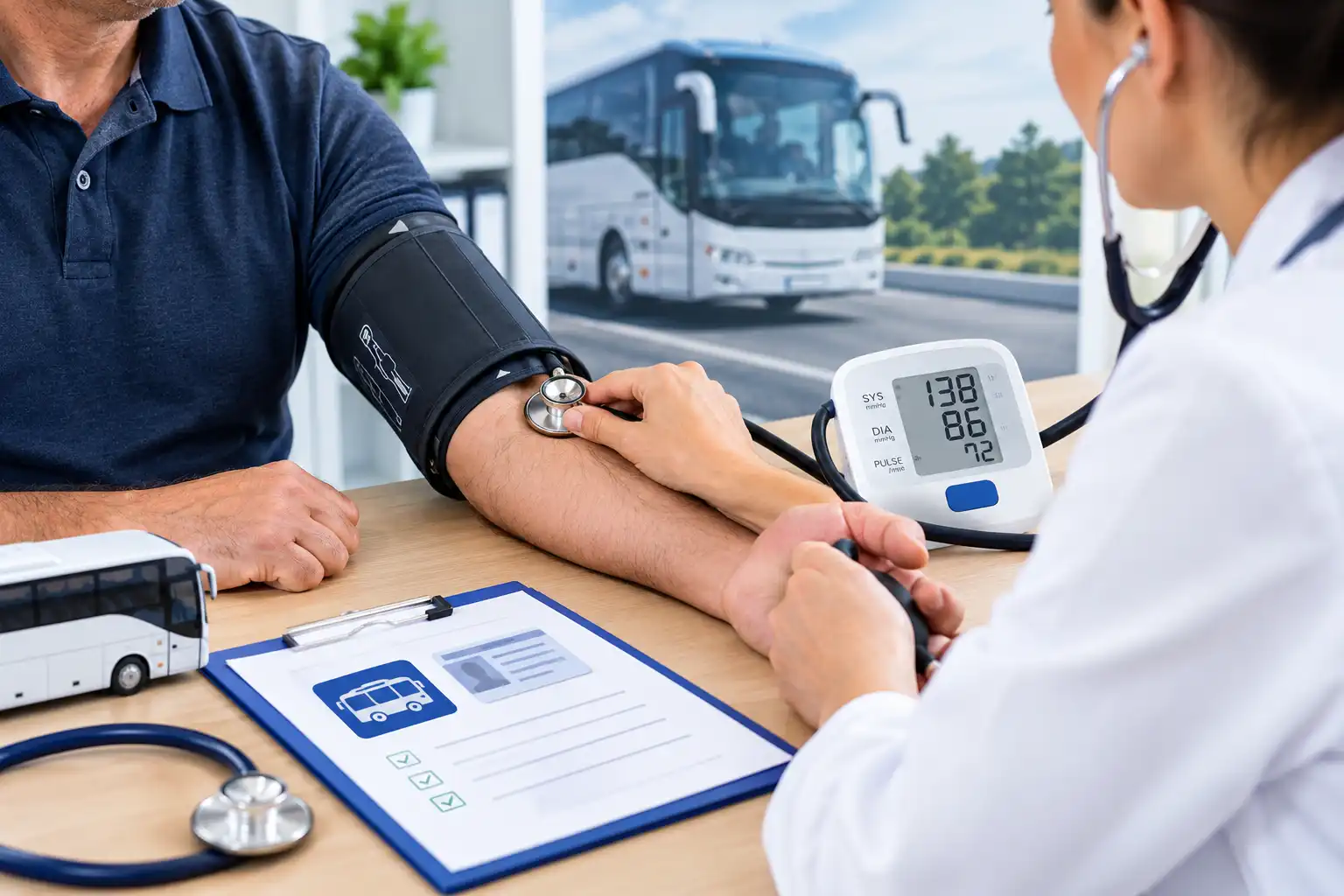
The DVLA has specific PCV medical requirements for bus and coach drivers, including blood pressure limits for Group 2 licence holders.
Understanding the link between high blood pressure and PCV licence requirements can help you prepare for your medical.
It also helps you understand when you may need further medical checks and what the DVLA requires from bus and coach drivers.
For Group 2 drivers, including bus and coach drivers, the DVLA requires you to stop driving and notify the DVLA if your resting blood pressure is consistently 180 mmHg or higher (systolic) and/or 100 mmHg or higher (diastolic). You must also stop driving and notify the DVLA if you are diagnosed with malignant hypertension.
You may be able to return to Group 2 driving once your blood pressure is controlled and your treatment has no side effects that could affect safe driving. Follow the DVLA’s instructions about your licence and any medical information it requires.
The limits stated by the DVLA are different to the thresholds used to diagnose high blood pressure. Even if you have a reading below the limit advised by the DVLA, you should aim to manage your blood pressure in accordance with the advice from your GP.
For further information, please see the official DVLA cardiovascular disorders guidance.
Can You Pass a PCV Medical with High Blood Pressure?
Yes, it is possible to pass a PCV medical test with high blood pressure. Your result depends on your blood pressure readings and medical history. It also depends on your treatment and whether you meet the DVLA’s medical standards.
Factors that may affect your hypertension PCV medical assessment include:
- Your blood pressure when it is measured.
- Whether your hypertension is well-controlled by medication
- Whether the readings are consistently high
- Whether you have any symptoms or side effects from medications, which could impair your driving ability
- Whether additional information from the medical profession is needed
The medical examiner will assess your general health condition as well as your medical documents. The medical examiner assesses your health as part of the medical. The DVLA makes the licensing decision where required and may ask for further medical information before deciding whether you can hold or renew your licence.
White-Coat Hypertension PCV Medical: What Drivers Should Know
White coat hypertension is when your blood pressure rises at medical visits due to emotions such as fear.
Talk to your GP: If your blood pressure is higher than normal, talk to your GP.
Home blood pressure checks: Your doctor may ask you to check your blood pressure at home. They may also suggest wearing a monitor for 24 hours to record your readings.
DVLA guidance: Feeling nervous can raise your blood pressure. However, you should not ignore a high reading. While home blood pressure readings can be useful, a high reading at home does not necessarily clear you to drive. Readings must be taken and assessed in line with the DVLA’s criteria.
What Happens If Your Blood Pressure Is Too High During a PCV Medical?
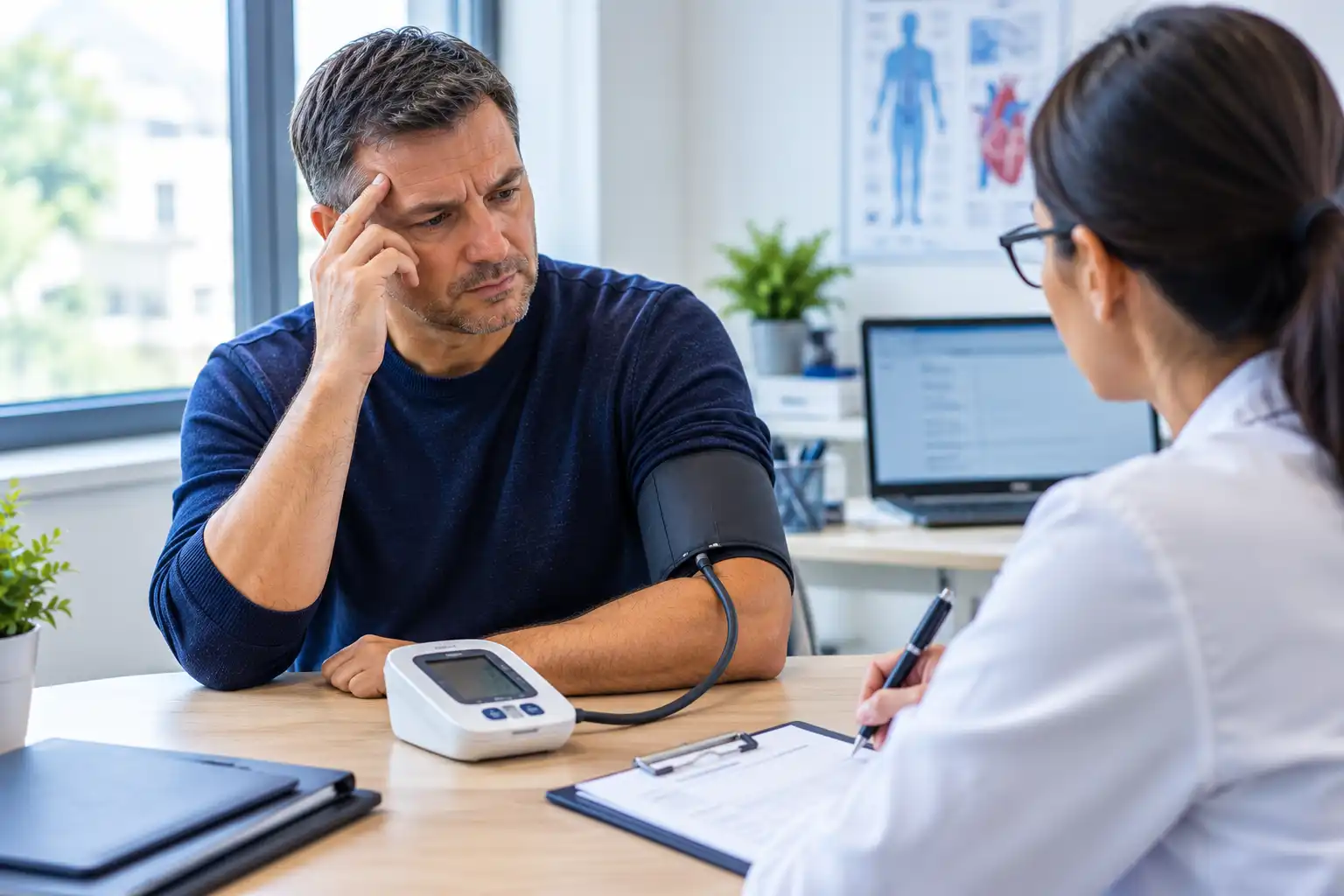
A high blood pressure reading does not always mean your licence will be refused. The next steps depend on your reading, your medical history and the DVLA’s medical standards.
Possible next steps include:
- Taking another measurement where appropriate.
- Seeking advice from your GP about controlling your blood pressure.
- Providing additional medical information if requested.
- Following DVLA instructions about your application or existing licence.
- Temporarily stopping Group 2 driving if the DVLA criteria require it.
The Group 2 restriction applies if your resting blood pressure is consistently too high. This means a top reading of 180 mmHg or higher or a bottom reading of 100 mmHg or higher.
The restriction also applies if you are diagnosed with malignant hypertension. Drivers in these circumstances must not drive and must notify the DVLA.
How To Prepare For A PCV Medical With High Blood Pressure?
You can prepare for your PCV medical by following these simple steps. If you suffer from hypertension or take medication, then use the following checklist as a guide before your medical.
- Follow any instructions given to you by your medical professional
- Bring along a list of any prescribed medication you are currently taking
- Have any relevant medical documents to hand in case they are needed
- Talk to your GP about recent high readings if you are concerned
- Allow plenty of time to get there to avoid rushing
- Sit quietly for a while if asked to do so before the test
- Continue any treatment or medication unless advised otherwise by your clinician
- Inform the tester of any relevant medical conditions and any side effects of medication which may impact your driving ability
- Ask any of the questions shown below if you are unsure of the results or what to do next
- If you have recently had high readings speak to your GP before your appointment
Whilst thorough preparation will ensure that you give the most accurate information for your assessment it does not guarantee a pass.
Book a PCV Medical with Driver Medical Test

Applying for or renewing your bus or coach licence is not something you look forward to if you have high blood pressure. The following information should help you understand what to expect before your test so that you can make your appointment easier.
Driver Medical Test offers medical assessments for drivers who are required to take them to maintain their working or driving licence. If you require a PCV medical, please contact us to discuss the tests and appointments available.
If you suffer from high blood pressure, or are on medication for high blood pressure, it is important to understand the DVLA requirements. If your blood pressure does rise during your medical examination, speak to your GP for advice.
Frequently Asked Question
1: Can you drive a bus with high blood pressure?
Yes, you may be able to drive a bus with hypertension if you meet the applicable Group 2 medical standards for high blood pressure and PCV medical. If your blood pressure stays very high when you are resting, you may need to stop driving.
2: Can you pass a PCV medical test with high blood pressure?
Yes, your result depends on your blood pressure readings and treatment. Your medical condition will also be considered. You must meet the relevant DVLA medical standards to keep or renew your licence.
3: What blood pressure is too high for a PCV licence?
If your resting blood pressure is consistently high, you must stop driving. You must also notify the DVLA. You may be able to keep or renew your licence once your blood pressure is under control. Your treatment also allows you to drive safely.
4: Does taking blood pressure medication affect a PCV medical?
Many people control high blood pressure by taking drugs and are otherwise fit to drive, according to the DVLA. However, if you are easily dizzy or have a propensity to faint, you should not be driving.
5: Can white coat hypertension impact a PCV medical?
Yes. If you are anxious during an appointment, it can cause your blood pressure to be high. Your GP or Pharmacist may ask you to check your blood pressure at home or to wear a monitor for 24 hours (called Ambulatory Blood pressure monitoring) . The DVLA will take this into account when considering your medical report against their standards.
6: What happens if I have a high blood pressure reading during my PCV medical?
The examiner may wish to take your blood pressure more than once or make further medical inquiries. You should be advised of any additional medical information that may be relevant. If your blood pressure was equal to or higher than the Group 2 limits you will be asked to stop driving and to notify the DVLA.
Conclusion

High blood pressure does not always mean you cannot hold a PCV licence. However, you must pass the DVLA’s Group 2 medical tests if you wish to drive a bus or coach. A very high level of blood pressure or being unable to control your blood pressure, plus any side effects of the treatment, could make you unfit to drive.
If you have any queries about your personal level of blood pressure, you should contact your GP for advice specific to your own case. In addition, you should take the latest advice from the DVLA and ask them to bring any relevant medical information about your case with them. Driver Medical Test can help you with PCV medical appointments and explain how to book.
