

Being diagnosed with diabetes does not mean you must give up your career as an HGV driver. Yes, you can drive an HGV in the UK if you have diabetes. You must meet the DVLA’s medical requirements and hold the correct licence.
The rules for HGV and bus drivers are stricter than for car drivers if you’re on insulin. You have to prove to the DVLA that you have a condition that is under control and that you can manage.
They will also ask about your history of hypoglycemia, including your awareness and any complications. Being aware of the symptoms can help you prepare for your HGV medical.
This guide explains the DVLA’s diabetes requirements for drivers with an HGV with diabetes. It also covers different diabetes treatments and how to prepare for your HGV medical examination.
Can You Drive an HGV with Diabetes in the UK?
Yes, many people with diabetes should be able to drive an HGV in the UK. An HGV licence falls under group 2, which includes large lorries and buses.
The DVLA will consider whether your medical condition could impair your ability to drive a vehicle or put other road users at risk.
If you use insulin to control your diabetes, then you will need to notify the DVLA. Before you can get an HGV licence, you must show that you can monitor your blood glucose levels. You also need to understand the risks of hypoglycaemia (low blood sugar).
Having diabetes in itself does not mean you are disqualified from driving. However, passing an HGV medical does not automatically guarantee that the DVLA will issue or renew your licence either. Understanding the DVLA Group 2 medical requirements is an important part of diabetes and HGV driving.
How Does the Type of Diabetes Affect Your HGV Licence?
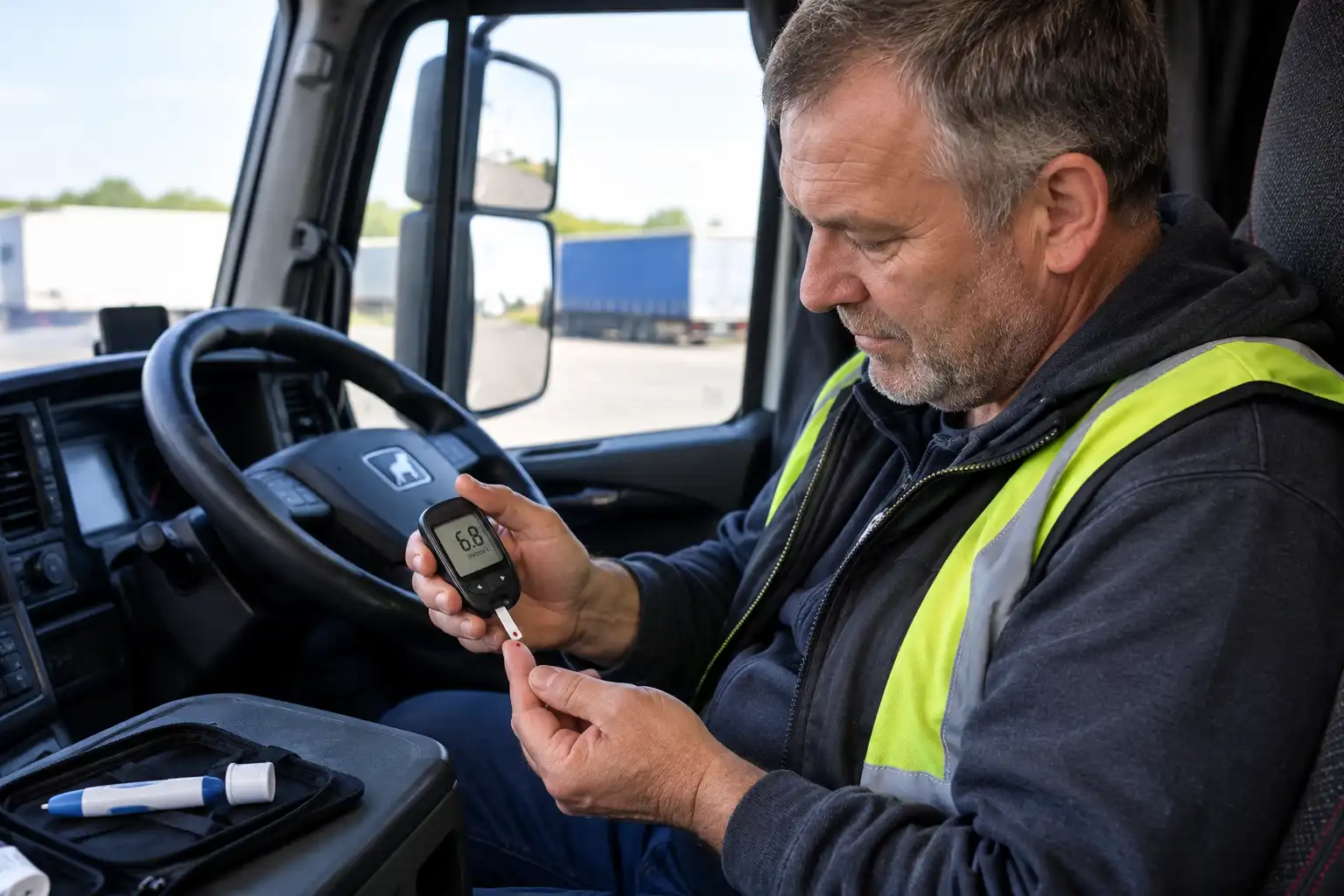
Type 1 Diabetes and HGV Driving
- Monitoring of blood glucose levels: It is the responsibility of the driver to check and monitor their levels as and when required.
- Knowledge of hypoglycaemia: Drivers must be aware of the symptoms and how to manage them.
- Medical assessment: Attendance at specialist medical assessment and providing evidence when required by the DVLA
- Eyesight: Meeting the eyesight requirements as set by the DVLA.
Type 2 Diabetes and HGV Driving
- Diet and general lifestyle: Drivers can control type 2 diabetes without the use of medication in some cases.
- Oral or injected medication: The type of treatment being undertaken will decide what rules the DVLA will enforce.
- Insulin treatment: Any driver with insulin-treated type 2 diabetes should follow the guidance for Group 2 drivers dealing with insulin.
Diabetes Treated with Insulin or Other Medication
- Insulin: You will need to pass specialist tests and have blood glucose monitoring as part of a DVLA Group 2 medical assessment.
- Sulphonylureas and glinides: You must satisfy the appropriate medical standards and notify the DVLA if you’re taking these medicines, which can cause low blood sugar.
- Other medicines such as metformin: These are associated with a lower risk of hypoglycaemia when used on their own. But you must still satisfy the relevant Group 2 requirements.
What Are the DVLA Diabetes HGV Requirements?
If you are a driver of an HGV and you need insulin, you are required to satisfy the DVLA Group 2 Medical Requirements. These are as follows:
- Recognise low blood sugar: You must be able to identify the warning signs and symptoms of hypoglycaemia.
- Avoid severe hypoglycaemia: You must not have had a severe hypo requiring the assistance of another person in the last 12 months.
- Ability to monitor blood sugar: You must be able to monitor your own blood sugar at the requested times and keep accurate records.
- Medical standards: You must have no diabetes related complications that could prevent you from driving.
- Annual reviews: You must be reviewed by an independent specialist diabetes consultant every 12 months.
- Validity: If you satisfy the requirements above, your Group 2 licence with insulin treatment will be valid for one year at a time.
- Starting insulin: You must stop driving Group 2 vehicles while the DVLA considers your application. Your diabetes must also be stable for at least one month before applying under the insulin-treated Group 2 process.
For the latest rules on diabetes and HGV driving, read the official DVLA guidance on diabetes and driving. This guidance explains the medical requirements that drivers with diabetes may need to meet.
What Happens During a Diabetes HGV Medical?
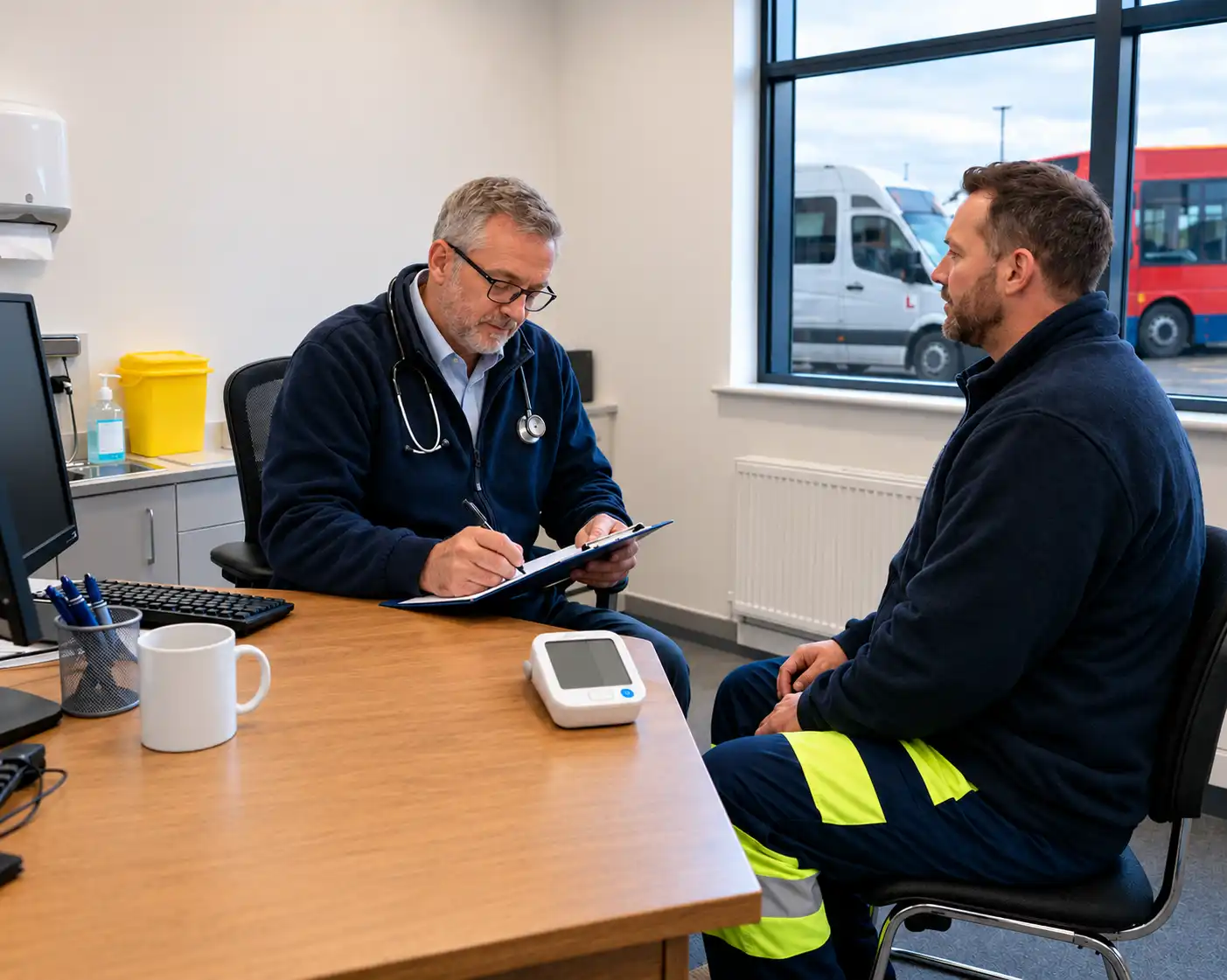
As part of the HGV medical, the doctor will assess whether your diabetes is likely to affect your ability to drive. You’ll be asked about:
- Your diabetes treatment: For example, whether you’re on insulin, tablets, or other forms of medication.
- Low blood sugar episodes: Whether you’ve had any severe hypos (blood sugar lows).
- Blood glucose records: Monitoring of your blood sugars, including what records you are keeping if you are on any form of treatment.
- Medical history: Any medical reports relating to your diabetes that you may have from your GP or diabetes specialist.
- Possible complications: If your diabetes can cause complications such as sight loss, kidney failure, nerve damage or problems with your limbs.
- Diabetic retinopathy: If you have diabetic retinopathy, you need to bring a letter from your eye specialist to your appointment.
The documents you’ll be asked to provide will depend on your treatment and medical history. Drivers being treated with insulin must fulfill additional requirements set by the DVLA.
Blood Glucose Monitoring and Hypoglycaemia Rules
If you are taking insulin and have a Group 2 licence, you will have to comply with the DVLA regulations for monitoring blood glucose levels:
- Check your blood glucose at least twice daily (including days when you’re not driving).
- Before your first journey.
- At least every two hours during driving.
- The necessary records to monitor your condition are required to be kept and made available for assessment.
Can HGV Drivers Use Continuous Glucose Monitors?

Yes. The DVLA permits eligible Group 2 drivers to use approved continuous glucose monitors (CGMs) subject to its requirements.
- Always carry a finger-prick blood glucose meter as a back-up to your CGM.
- Use a finger-prick blood glucose test to check your blood glucose if there is a discrepancy between what your sensor is reporting and how you feel.
- You should know the symptoms of blood sugar.
If you have an episode of severe hypoglycaemia, you will need to stop driving and follow the DVLA’s instructions.
Can You Get or Renew an HGV Licence If You Have Diabetes?
The short answer is yes, but there are some conditions.
- New applications: You will need to take a Group 2 medical to prove you are fit to drive.
- Licence renewals: You will be required to continue to meet medical requirements, and any change in your condition or treatment should be reported to the DVLA
- Changes in your health: Severe hypos, new complications or changes to your medication may require further medical information.
- Initiation of insulin: You must stop driving Group 2 vehicles until the DVLA confirms the status of your licence. These requirements are important to understand when applying for an HGV licence with diabetes.
If you are unsure if you can drive, contact the DVLA before driving.
How Can You Prepare for an HGV Medical with Diabetes?
As such, here is a list of things that you should consider prior to your HGV medical:
- Know what treatments you undertake: Be prepared to inform the examiner of what type of medications you are taking for your diabetes and if your treatment has changed.
- Prepare your medical records: Be prepared to have access to relevant information regarding your diabetes and associated complications.
- Review your glucose records: If you take insulin, be sure to bring the records of your blood glucose levels as required by the DVLA.
- Be prepared to talk about any hypos: Any experiences of low blood sugar, particularly severe cases, should be disclosed to the examiner.
- Review eyesight standards: Be sure to know the eyesight standards for an HGV licence.
- Speak to a diabetes specialist: Beforehand, speak to a diabetes specialist and ask them if there are any additional medical records that they think you may need to provide for your application.
- Nerve damage: If diabetes has affected the nerves in your arms or legs, you need to provide information about the extent of the damage, any investigations carried out, and any treatment you are currently receiving or have received.
- Check the DVLA guidelines: Check the DVLA’s guidelines for people with diabetes before your appointment to make sure that you are aware of the requirements for your particular treatment.
If you are unsure of what documentation to bring along with you. You can always contact your HGV medical professional before your appointment to prevent delays.
Book Your HGV Medical with Driver Medical Test
Are you searching for an HGV medical near me? At Driver Medical Test, we can help you arrange your medical for a new HGV licence or a renewal.
If you have diabetes, you may be wondering if you will pass the medical. It depends on what treatment you are on and whether you comply with the DVLA’s medical requirements.
Before your appointment, check the requirements that apply to your condition and bring any relevant medical records with you. If you’re unsure what you need, get in touch with the Driver Medical Test before booking.
Contact us to find out more about our Affordable HGV medicals near me and arrange your appointment.
Frequently Asked Question
1: Can diabetics drive HGVs in the UK?
Yes, they can. People living with type one or two diabetes can drive commercial vehicles. If they meet certain requirements established by the DVLA under Group 2.
2: Can you get an HGV licence with diabetes types one and two?
Yes. If you are permitted to drive under group two of the DVLA, you can obtain a commercial driving licence for people with diabetes. However, it depends on the treatment, level of blood sugar, and other resulting complications.
3: Can a person with insulin be given an HGV licence?
Yes, provided that they meet the following DVLA criteria: regular glucose monitoring, screening for reduced levels of blood sugar and hypoglycaemia standards.
4: Does type two diabetes impact your HGV medical?
No. It is not guaranteed that you will be denied a commercial driver’s licence if you live with type two diabetes. However, you must pass some tests, including tests for the effects of medication, reduced blood sugar levels, and other resulting complications.
5: Can Having Diabetes Impact Your HGV Licence?
The condition may prevent you from passing the rigorous test administered by the DVLA. Some of the problems that may be encountered include poor sugar control and secondary complications that may affect your driving capacity.
6: Can I drive an HGV while waiting for a DVLA decision?
Not always. If you start insulin, you must stop driving Group 2 vehicles until the DVLA makes its licensing decision. If you are waiting for a decision for another reason, check your current driving entitlement and follow the DVLA’s instructions. If you are unsure, contact the DVLA before driving.
Conclusion

You can drive an HGV with diabetes in the UK if you meet the DVLA’s medical requirements. Your eligibility depends on your treatment, blood glucose control, and any complications that could affect your driving.
Before applying for or renewing your licence, check the DVLA’s latest guidance and speak to your diabetes specialist.
Need an Expert HGV medical near me? Contact Driver Medical Test to find out more about our service and book your appointment.
