
A C1 driving licence allows you to drive vehicles that are over 3,500kg and up to 7,500kg in weight. You may need one to drive a larger van, horsebox, motorhome, ambulance or other medium-sized vehicle.
Getting a C1 licence involves a few steps. You usually need to apply for a C1 provisional licence, complete a Group 2 medical, pass the required theory tests, and take a practical driving test.
The process can vary depending on what you plan to use the licence for.
For example, professional drivers may have additional requirements.
In this guide, we explain the C1 licence requirements for 2026. It also includes the application process, medical, training, theory and practical tests, and the costs you may need to consider.
What Is a C1 Driving Licence?
A C1 driving licence permits the holder to drive vehicles with a (MAM) between 3,500kg and 7,500kg, typically with a trailer of up to 750kg.
The category is positioned between a standard category B car licence and the heftier category C licence. It is applicable when the intended vehicle’s weight surpasses the category B limits but does not cross the 7,500kg C1 boundary.
For instance, a motor vehicle with a MAM of 6,500kg would fall into the C1 category, under the assumption that the other licensing criteria are fulfilled. Vehicles with a weight surpassing 7,500kg would require a higher category, namely, category C.
It is relevant to note that the C1 category does not provide complete towing exemptions. Thus, if someone is looking to tow a trailer that is over 750kg, it would be a C1E licence they would need.
You can check the official GOV.UK for a full breakdown of vehicle categories and their requirements.
C1 Licence Requirements in the UK
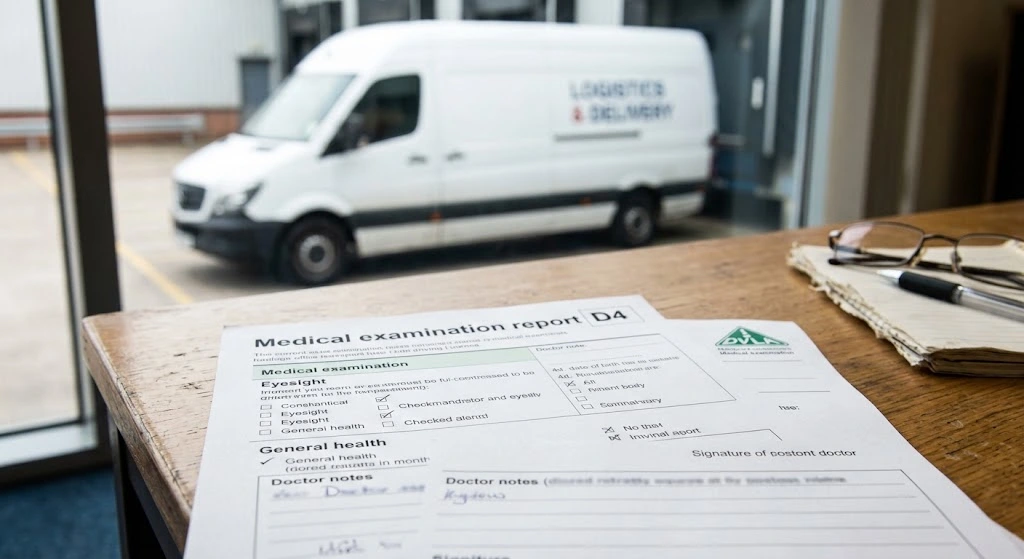
To apply for a new C1 licence, you normally need to hold a full car driving licence and meet the relevant Group 2 medical standards.
The main C1 licence requirements include:
- You must hold a valid category B driving licence.
- You need the appropriate provisional C1 entitlement.
- You must complete the required Group 2 medical assessment.
- You need to pass the relevant theory and practical tests where applicable.
- You must meet the required eyesight and medical standards.
The minimum age for C1 is generally 18. There are separate rules for some vocational driving circumstances, so your situation matters. If you are applying at a younger age or for professional driving.
Legal requirement: A new Group 2 entitlement requires a medical assessment recorded on a D4 form.
How to Get a C1 Licence: Step-by-Step Essay
The process of how to get a C1 licence is easier when you take it step by step.
Step 1: Check your current licence.
We’ll need to check your current licence to see if you already have a C1 entitlement, which is the case for some drivers who passed their car test before the change in licensing requirements.
Step 2: Arrange your medical.
For a new Group 2 entitlement, you need a completed D4 medical examination report.
Step 3: Apply for provisional C1 entitlement.
You normally complete the D2 application and submit the required medical documentation to the DVLA. You can also check the official GOV.UK guidance for the latest application requirements.
Step 4: Prepare for the necessary tests.
If you need to take a C1 test, make sure to take training courses that prepare you to operate the type and size of vehicle you’ll be using.
Step 5: Take the relevant test.
Your training provider can help you understand the current test process and prepare you for the vehicle-handling and road-driving requirements.
Step 6: Receive your updated entitlement.
Once you have completed the required process successfully, your licence can be updated with the relevant C1 entitlement.
Applying for a C1 Provisional Licence
You apply for a C1 provisional licence through the DVLA’s vocational vehicle licensing process.
For a C1 application, the standard route involves:
- Form D2
- D4 medical examination report
- Required supporting documents
The D4 medical must be completed by an appropriately qualified medical professional. You then send the required documents to the DVLA.
C1 Medical and D4 Medical Requirements
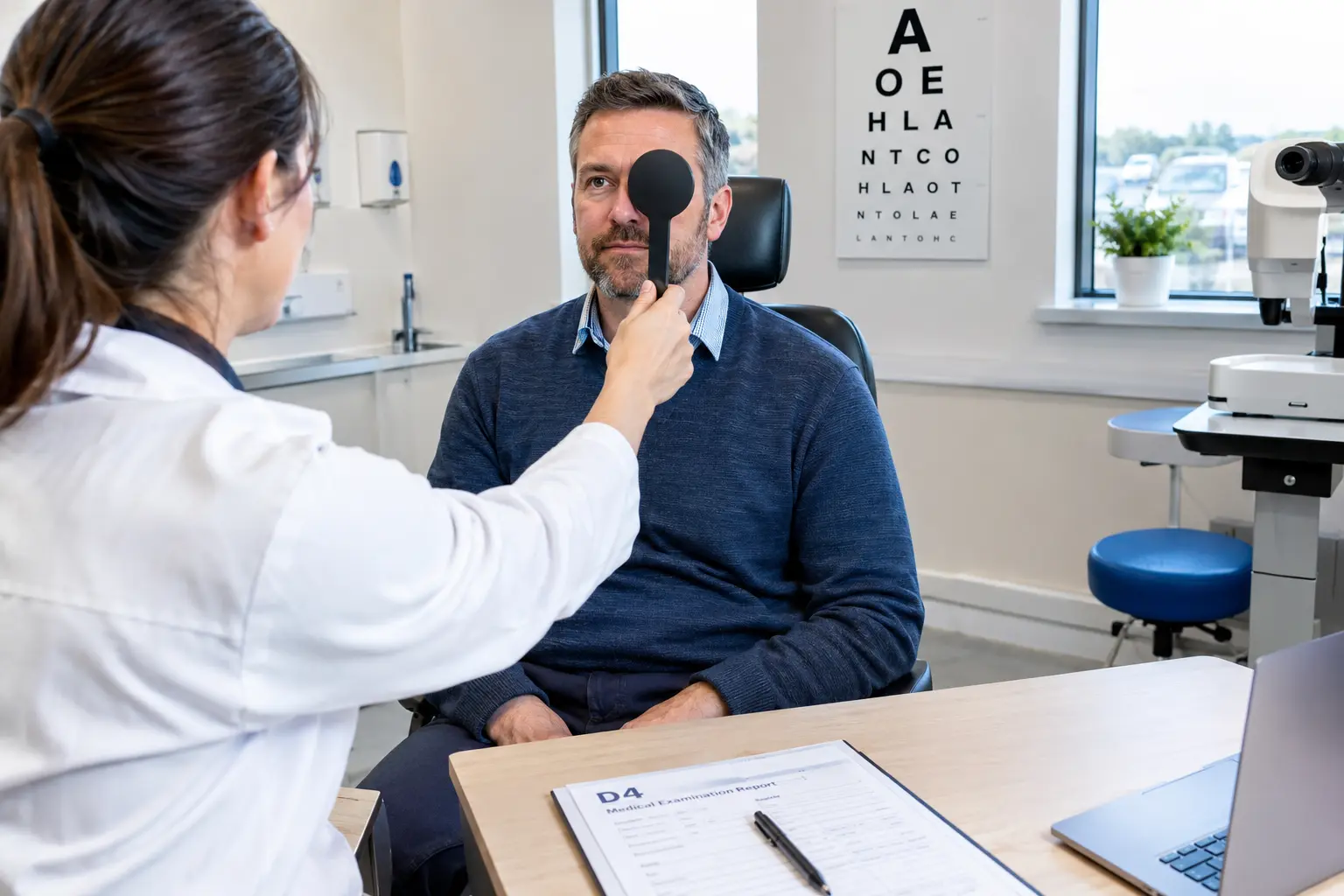
A C1 applicant needs a D4 medical because C1 is a Group 2 licence, and Group 2 drivers must meet stricter medical standards.
The D4 assesses whether you meet the relevant fitness-to-drive standards. The examination can cover areas including:
- eyesight and visual ability.
- neurological conditions.
- diabetes.
- cardiovascular health.
- psychiatric illness.
- substance misuse.
- sleep disorders.
- other medical conditions that could affect safe driving.
The D4 form is designed to record the medical assessment rather than simply provide a general health check.
You should bring suitable identification and your glasses or contact lenses if you use them. Details of your current medication and useful information about your medical history.
Using a medical provider familiar with D4 medical can make the process more straightforward. Because the examiner understands the form and the information DVLA requires.
Driver Medical Test provides D4 medical assessments for applicants who need a C1 medical.
C1 Licence Training
C1 training helps you learn to control and drive a larger vehicle safely.
Training usually covers:
- Vehicle positioning and road awareness.
- Mirror use and observation.
- Steering and braking.
- Speed control and direction.
- Manoeuvres and reverse manoeuvres.
- Preparing for the C1 driving test.
The amount of training you need depends on your driving experience. There is no fixed number of lessons that guarantees a pass.
The C1 Driving Test
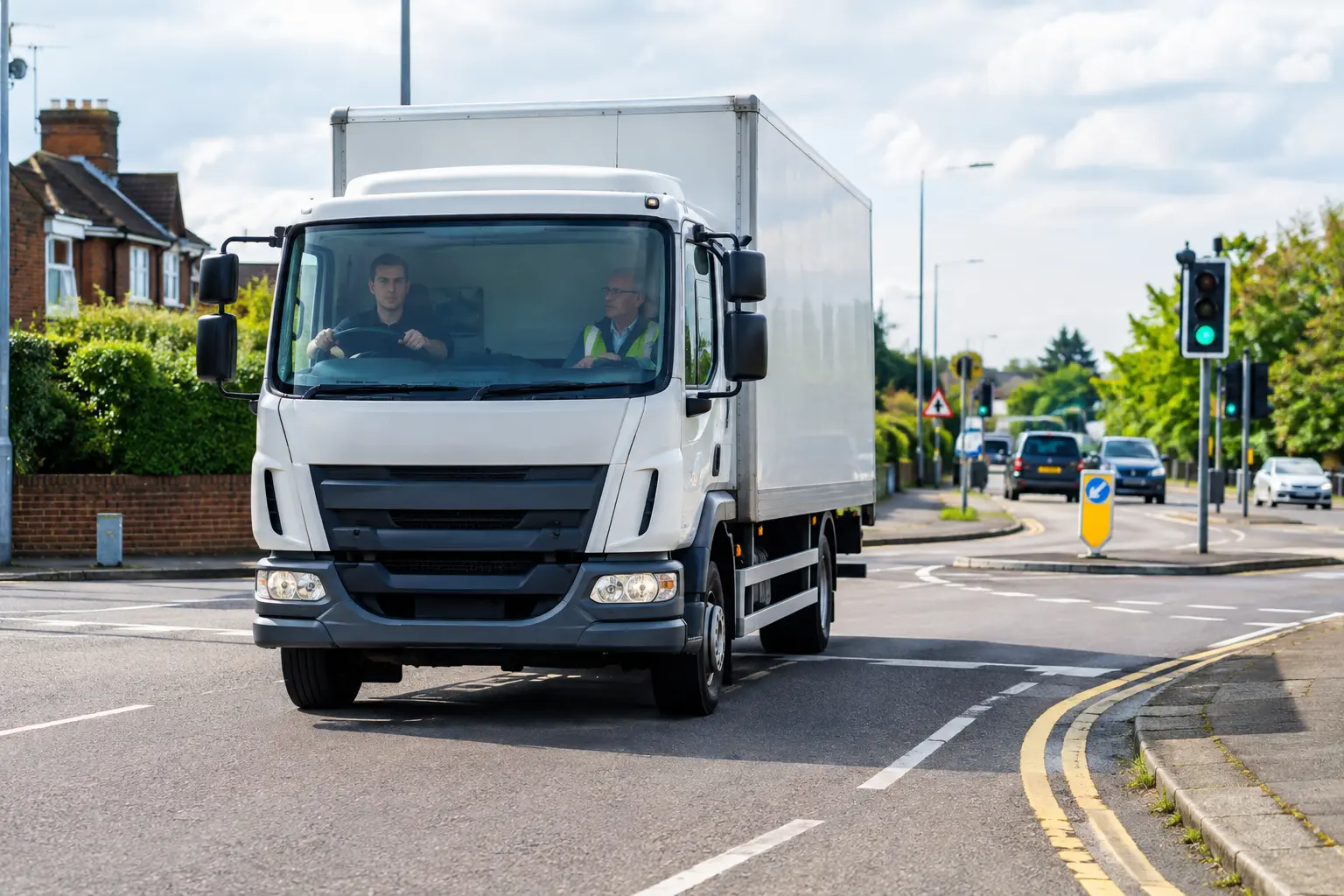
The C1 driving test checks whether you can safely control and drive a vehicle over 3,500kg and up to 7,500kg.
Key areas include:
- Vehicle control and road positioning.
- Mirrors, observation and signalling.
- Speed and braking.
- Junctions and other road situations.
- Manoeuvring and reversing.
- Safe awareness of the vehicle’s size and weight.
How Much Does a C1 Licence Cost?
The cost of a C1 licence varies because the medical, training and other expenses depend on your circumstances and where you complete each part of the process.
Typical cost categories include:
- Provisional licence: The current DVLA application for a provisional HGV or bus licence is free.
- C1 medical: Private doctors and medical providers set their own charges, so prices vary.
- Training: This is usually one of the highest variable costs. The amount depends on your experience, training provider, vehicle, and number of lessons.
- Theory and practical tests: DVSA sets official test fees. Current fees should be checked before booking because the fee depends on the test being taken and when it is booked.
- Retests: If you need another test, you may have to pay another test fee and potentially additional training costs.
There is no reliable single “C1 licence cost” that applies to every applicant. Your total will depend mainly on the training you need, your medical provider, test requirements, and location.
With Driver Medical Test, you can get unlimited free retests within 3 months as part of the medical service.
Is a C1 Licence the Same as a 7.5 Tonne Licence?
Yes, a C1 is the same as a 7.5-tonne licence. Because the licence allows the holder to drive up to 7,500kg MAM
Although the phrase ‘7.5 tonne licence’ is often used when searching online for information on a C1 entitlement. It is important to remember that the C1 remains the correct terminology for the licence.
If you wish to tow a heavier trailer than is otherwise permitted by the C1, then you may need to consider the C1E licence. This allows C1-qualified drivers to tow more than a 750 kg trailer up to the permissible combined weight of the trailer and the towing vehicle.
What Can You Drive With a C1 Licence?
Its depend on the type and use of the vehicle you can drive, for example:
- larger commercial vans.
- some ambulances.
- horseboxes.
- larger motorhomes.
- specialist vehicles.
- certain recovery or service vehicles.
The important point is the vehicle’s authorised weight and the category shown on your licence.
C1 does not automatically allow you to drive every vehicle weighing up to 7.5 tonnes. Other requirements can apply depending on what you are driving, how you use it, and whether you are driving professionally.
If the vehicle has a trailer above the C1 limit, you may need C1E instead.
You should also check whether your intended driving requires Driver CPC or other professional qualifications.
Frequently Asked Question
1: What age do you have to be to get a C1 licence?
A: You can generally apply for a C1 licence from age 18, subject to the relevant licensing and medical requirements.
C1 is a Group 2 licence, so applicants must meet the applicable medical standards. Different rules can apply to certain vocational driving situations.
2: Do I need a medical for a C1 licence?
A: Yes, a new C1 application usually needs a Group 2 medical completed on a D4 form. This is to determine if you satisfy the fitness-to-drive requirements for Group 2.
3: Is it possible to obtain a C1 licence without taking the driving test?
A: Not always. If you already have a C1 licence, you may not need to obtain it through a new practical test.
For someone applying for a new C1 licence, the relevant tests normally form part of the licensing process. Check your existing licence first because an older licence can change what you need to do.
4: How long does a C1 licence last?
A: A new Group 2 entitlement is generally issued for a maximum of five years, subject to the applicable medical requirements.
Group 2 licences are normally renewed every five years, with additional medical requirements from age 45 and annual renewal requirements from age 65.
5: Do I need a Driver CPC for a C1 licence?
A: Not every C1 driver needs the same professional qualification. Driver CPC requirements vary depending on the type of vehicle being driven, the purpose of the drive, and any applicable exemptions.
6: Can I drive a C1 vehicle for work?
A: Yes, you can drive a C1 vehicle for work purposes, provided that you hold the appropriate entitlement and fulfill any additional requirements.
For vocational use, check that a Driver CPC or other qualification is not required for your occupation.
Ready to Start Your C1 Licence Journey?
Getting a C1 driving licence UK applicants can apply for involves meeting the required medical and licensing standards. A D4 medical is an important part of the process and must be completed for a new Group 2 entitlement.
At Driver Medical Test, we provide D4 medical assessments for C1 licence applicants. Our medical team can help make this stage straightforward.
If you are ready to begin your C1 licence application, book your medical with Driver Medical Test today.
