
When comparing HGV vs LGV, there is no real difference between the two. The HGV and LGV are both categories of commercial driving licences. Both licences allow the holder to drive commercial vehicles weighing more than 3.5 tonnes.
HGV is the traditional term for a lorry driving licence. LGV is the official term the DVLA uses. However, most drivers, employers, and job adverts still use the term HGV.
You will never be presented with a choice between an “HGV licence” and an “LGV licence”. When purchasing your LGV driving licence, you are actually buying a category (usually C or C+E for LGVs).
This is different to what many people think/leads to many people getting confused. You’ll often see HGV and LGV used interchangeably in job adverts, by training providers, and across government websites.
This is why people choose the Driver Medical Test. We help you understand the process of applying for or renewing your medical. Our goal is to make sure you know what to expect before your medical appointment.
HGV and LGV Difference
Are they actually different? No, HGV and LGV define the same category of vehicles and the same category of driving licence. It’s just that they use slightly different terms to refer to the same thing.
HGV is the traditional name for these vehicles and this category of driving licence. The DVLA now uses the term LGV in its official government documents.
HGV never fell out of use and continued to be used by everyone in day-to-day communication. Recruiters advertise “HGV driver” jobs. Training schools run “HGV training courses.” Most drivers will refer to themselves as ‘HGV drivers’ even though their entitlement falls under an LGV entitlement on their licence.
Neither HGV nor LGV is a licence category, as the legal entitlement is in the C and C+E categories, which is what defines the true decision point.
What Is an HGV Licence in the UK?
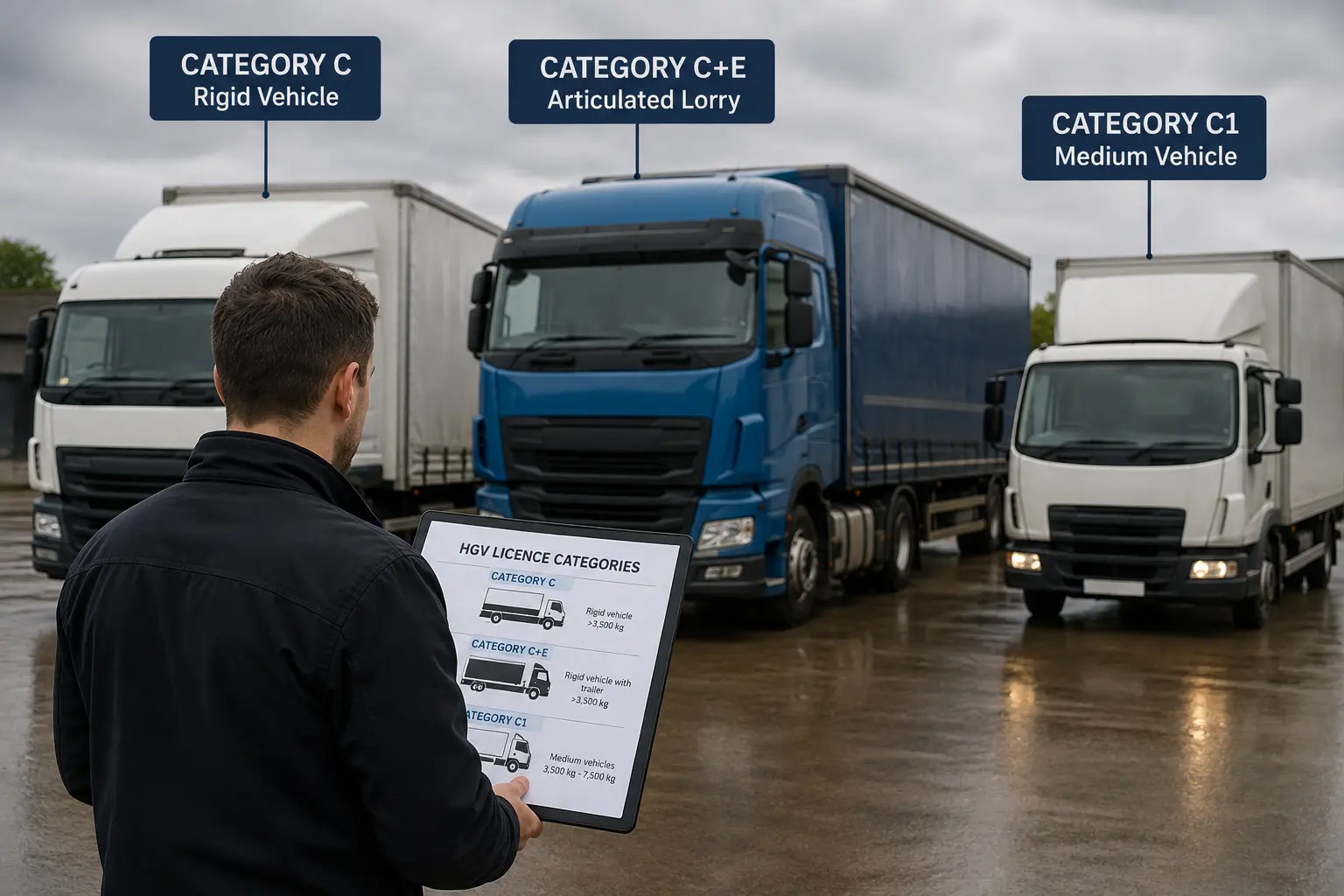
An HGV licence is a collective name for various categories of driving licences. It’s required to drive commercial vehicles that weigh more than 3,500 kg.
The category HGV is not a qualification but has subcategories in which one has to enroll depending on a vehicle’s weight, type, and tow capacity.
Category C
Category C is associated with driving large rigid goods vehicles over the relevant weight limit, subject to the conditions of the licence.
A typical example could be a large rigid delivery truck, distribution vehicle or other heavy goods vehicle that does not require a C+E entitlement.
Category C+E
Category C+E allows the driver to drive a Category C vehicle with a trailer or semi-trailer under the prescribed conditions.
This qualification is usually what one refers to when discussing a driver’s licence for an articulated lorry.
The crucial difference is that the vehicle one wishes to drive dictates the category of the driver’s licence. Thus, an HGV training provider or the licensing authority can advise on the most suitable route in this regard.
Other categories
Not every goods vehicle requires Category C or C+E. It depends on the vehicle, its weight and the circumstances; other categories such as C1 may be relevant.
This is why it is better to identify the vehicle you want to drive first and then establish the appropriate licence category.
What Is an LGV Licence in the UK?
An LGV licence in the UK is not typically a standalone licence category that would exist separately from category C.
LGV (Large Goods Vehicle) is actually just a shorthand for describing bigger trucks and, sometimes, the entitlement to drive them
Training providers, employers, medics, and others can all use the terms “LGV” and “HGV” interchangeably. However, what matters is the category listed on your licence.
So, when you hear about an LGV licence course, it is important to make clear that it is an HGV course to get category C (or any other category).
For example, it prepares you for the test, not for an LGV licence specifically.
HGV and LGV Licence Categories Explained
HGV and LGV are not official driving licence categories that you require to drive larger goods vehicles. Instead, the classification splits are based on the weight of the vehicle that you wish to drive.
Category C1: Covers vehicles over 3500 kg up to 7500 kg in weight.
Category C: Generally for larger rigid goods vehicles over 3,500kg.
Category C+E: For Category C vehicles with a trailer or semi-trailer, commonly used for articulated lorries.
If you are planning to become a professional HGV driver, you may also need to meet DVLA Group 2 medical standards and complete a D4 medical. It depends on your licence application and circumstances.
The key is to pick the category that you want to have on your licence, which depends on the vehicle you are going to be driving, not whether it is called an HGV or LGV.
What is a D4 medical?
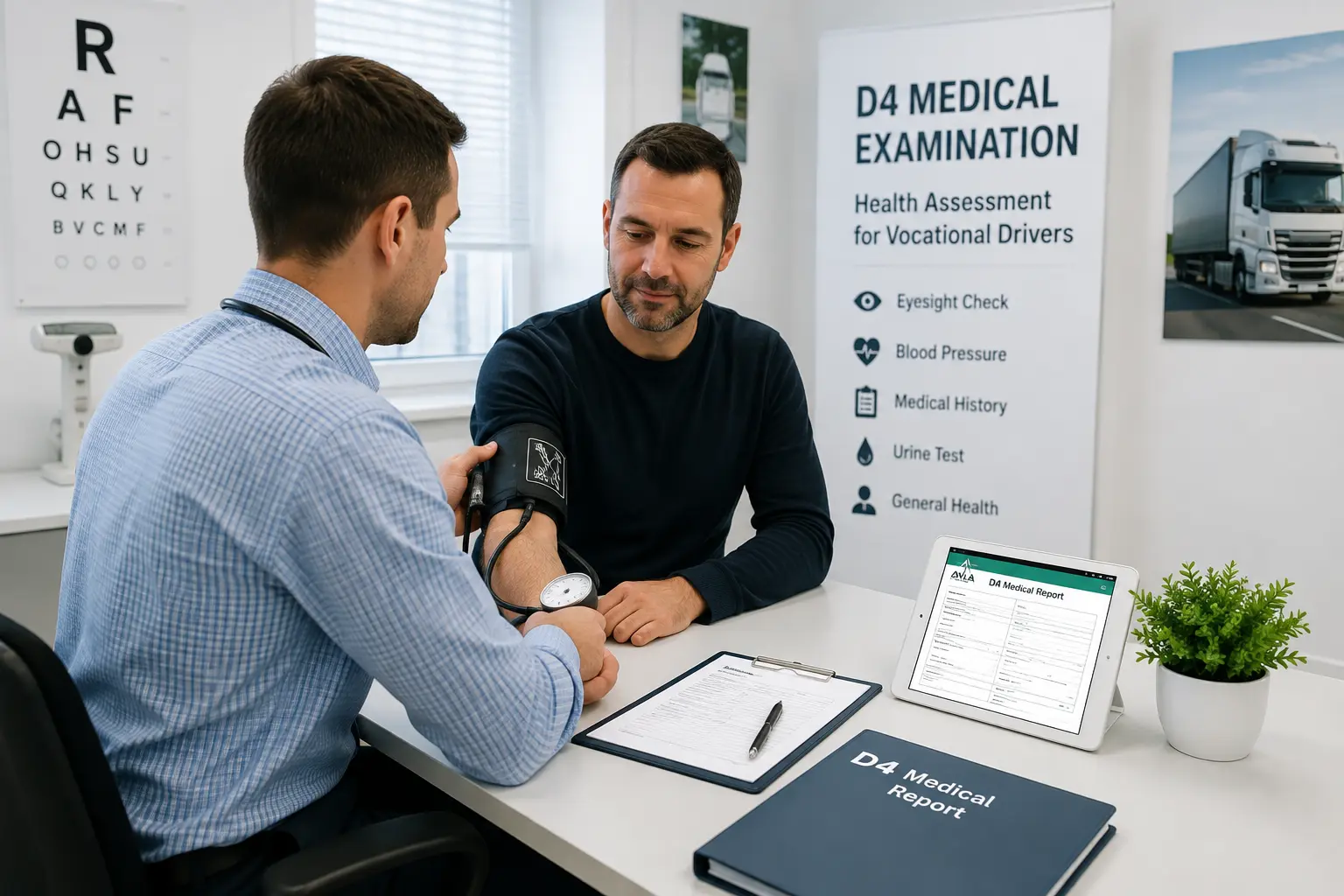
A D4 medical examination is a medical assessment for vocational driving licence applications. The results are recorded on the DVLA’s D4 medical examination report.
The examination is carried out by a suitably qualified medical professional. They assess the areas required under the relevant DVLA standards.
What is a DVLA Group 2 medical?
A DVLA Group 2 medical applies to drivers of certain larger vehicles and passenger-carrying vehicles. These drivers must meet higher medical standards set by the DVLA.
Group 2 standards are important because driving large goods or passenger vehicles involves greater responsibility. If a health condition affects a driver’s ability to drive safely, the consequences can be more serious.
The medical assessment can consider areas such as:
- Eyesight and visual ability.
- Cardiovascular health.
- Neurological conditions.
- Diabetes and other relevant medical conditions.
- Mental health and substance-related considerations where applicable.
- Other conditions that may affect safe driving.
The exact assessment depends on the individual’s circumstances. It also depends on the DVLA medical standards that apply to their case.
What Happens During a Medical Test?
A Medical test checks whether you meet the medical standards for vocational driving. These standards apply to the relevant HGV driving entitlement.
The appointment normally starts with questions about your medical history. This is followed by the appropriate clinical checks.
Depending on the circumstances, the assessment may include:
- Reviewing your medical history
- Checking your eyesight
- Measuring blood pressure
- Discussing relevant medical conditions or medication
- Carrying out other checks required for the medical assessment
- Completing the relevant medical documentation
It is important to answer medical questions accurately. If you have a medical condition or take medication, it does not automatically mean you cannot hold a vocational driving licence.
Different medical conditions are assessed according to different DVLA standards. A medical professional can assess your circumstances against the relevant requirements.
When booking a Driver Medical Test, make sure the provider understands which medical assessment you need. They should also be able to complete the correct documentation.
HGV/LGV Driver Requirements in the UK
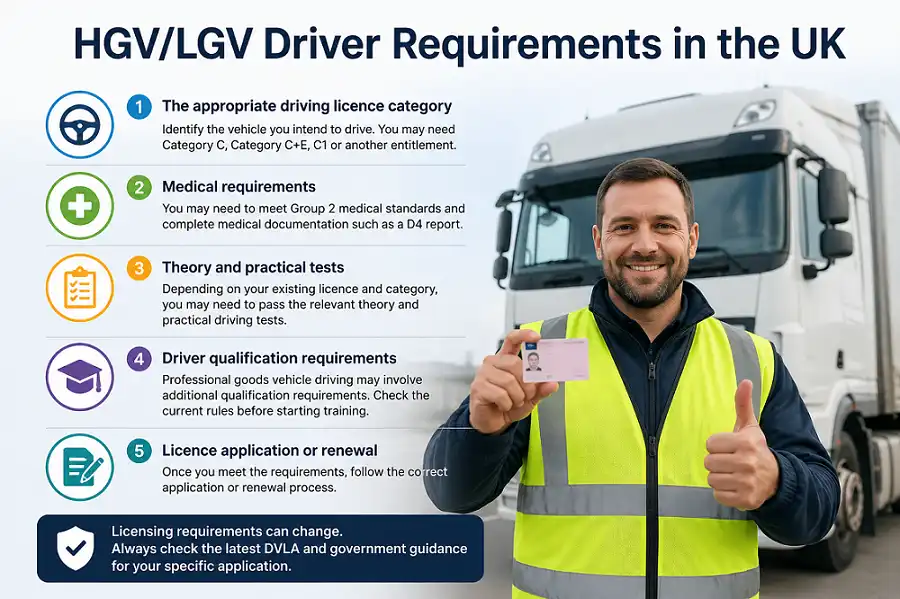
The requirements for becoming an HGV/LGV driver in the UK vary depending on the category of the licence. You are applying for, and the type of driving you are interested in doing.
At a high level, someone looking to become a professional goods vehicle driver may need to consider:
The appropriate driving licence category
First identify the vehicle you intend to drive. This determines whether you may need Category C, Category C+E, C1 or another entitlement.
Medical requirements
For relevant vocational licence applications, you may need to meet the applicable Group 2 medical standards. Complete the appropriate medical documentation, such as a D4 examination form.
Theory and practical tests
Depending on your existing licence and the category you are applying for. You may need to complete the relevant theory and practical driving tests.
Driver qualification requirements
Professional goods vehicle driving can also involve separate professional qualification requirements. The rules depend on the type of driving and your circumstances, so check the current requirements before starting your training.
Licence application or renewal
Once you meet the requirements, you can follow the relevant application or renewal process.
Licensing requirements can change over time, so always check the latest DVLA and government guidance for your specific application.
HGV vs LGV: Which Licence Do You Need?
The best way to decide is to start with the vehicle rather than the terminology.
For example:
If you want to drive a large rigid lorry: You may need Category C. It depends on the vehicle and your circumstances.
If you want to drive an articulated lorry: You will generally be looking at Category C+E.
If you want to drive a smaller goods vehicle: A category such as C1 may be relevant if the vehicle falls within its weight limits.
This is why simply asking, “Do I need an HGV or LGV licence?” does not always provide enough information.
A better question is:
“Which driving licence category covers the vehicle I want to drive?”
Once you know the category, you can check the relevant application, testing and medical requirements.
How to Choose a Medical Provider?
If you search for ‘HGV medical near me‘, you are likely to get a list of medical professionals who offer vocational driver assessment services.
Convenience is great, but should not be the only deciding factor.
Before booking an appointment, carry out the following checks:
- Whether the provider offers the type of medical you need.
- Whether the medical professional is appropriately qualified.
- Whether the correct D4 documentation can be completed.
- What checks are included in the appointment.
- Whether appointment times suit your schedule.
- The total cost and what it includes.
- Whether you need to bring glasses, medication information, or other documents.
A provider such as Driver Medical Test can help drivers arrange the right vocational medical assessment. This can include D4 medical appointments, where available.
It is best to confirm which medical you need when booking. This is especially important if you are applying for a specific licence category, rather than simply asking for an “LGV medical”.
Frequently Asked Question
1: Is HGV the same as LGV?
A: HGV and LGV are commonly used terms for large goods vehicles and are not separate UK licence categories. Your entitlement depends on your licence category, such as C or C+E.
2: Do I need an HGV medical Test for an LGV licence?
A: If you need a Group 2 vocational licence, you may require a medical. Providers may call it an LGV or HGV medical, but DVLA rules determine what is needed.
3: What is a D4 medical?
A: A D4 medical is the DVLA form used to record your vocational driver medical assessment for relevant licence applications.
4: What is a DVLA Group 2 medical?
A: A Group 2 medical is an upgraded standard of medical examination that is needed for certain vocational drivers to test their medical and eyesight requirements.
5: How can I apply for an HGV licence in the UK?
A: One has to choose the right category, pass the required medical tests, complete the theory and the practical tests. As well as pass all the driver qualification requirements.
6: Can I find an HGV medical near me?
A: Yes. Many providers offer HGV medicals across the UK. Make sure they can complete the correct DVLA medical forms for your application. Driver Medical Test also offers HGV medicals at several convenient locations across the UK. With a range of appointment times to make booking easier.
Conclusion

The key point in the HGV vs LGV debate is a simple one: whilst HGV and LGV are used terms for large goods vehicles. They are not actually two distinct categories for a ‘modern’ UK driving licence, which a driver must make a choice between.
The licence that an individual purchases will depend on what they propose to drive, and the categories (usually Category C or Category C+E) that the vehicle falls into.
Where Group 2 standards apply, an HGV medical or D4 medical may be required.
If you’re unsure which medical test you need for your HGV or LGV licence, Driver Medical Test can help. Book your HGV medical or D4 medical examination with GMC-Registered doctors and get the right paperwork completed for your application.
