
Good vision is important for driving an HGV safely. The HGV driver eyesight requirements ensure you can see road signs clearly and read information from a distance. You must also be able to spot potential or current hazards, as well as remain aware of other traffic and pedestrians around you.
HGV drivers must meet higher vision standards than car drivers. This is because HGV and bus licences come under the DVLA’s Group 2 medical standards. These rules apply to drivers of larger vehicles, including those who drive professionally.
Knowing the requirements before your D4 or HGV medical can help you prepare. If your eyesight has changed, you may need an updated glasses or contact lens prescription before your medical.
This guide explains the requirements and what to expect during the eyesight checks at a medical. It also explains what to do if you are unsure whether your vision meets the required standard.
What Are the HGV medical eyesight requirements?
The main HGV medical eyesight requirements are based on visual acuity and visual field.
For Group 2 bus and lorry drivers, the current DVLA standard requires:
- At least 6/7.5 Snellen visual acuity in the better eye.
- At least 6/60 Snellen visual acuity in the poorer eye.
- The required acuity can be achieved using corrective contact lenses where needed.
- Where glasses are used to meet the minimum standard, the corrective power must not exceed +8 dioptres in any meridian of either lens.
- The driver must also meet the applicable Group 2 visual field standard.
These requirements are higher than the standard that applies to ordinary car and motorcycle drivers.
Snellen measurements can seem confusing if you have never had an eyesight test before. Put simply, they show how clearly you can see at a specific distance.
Why are HGV eyesight standards stricter?
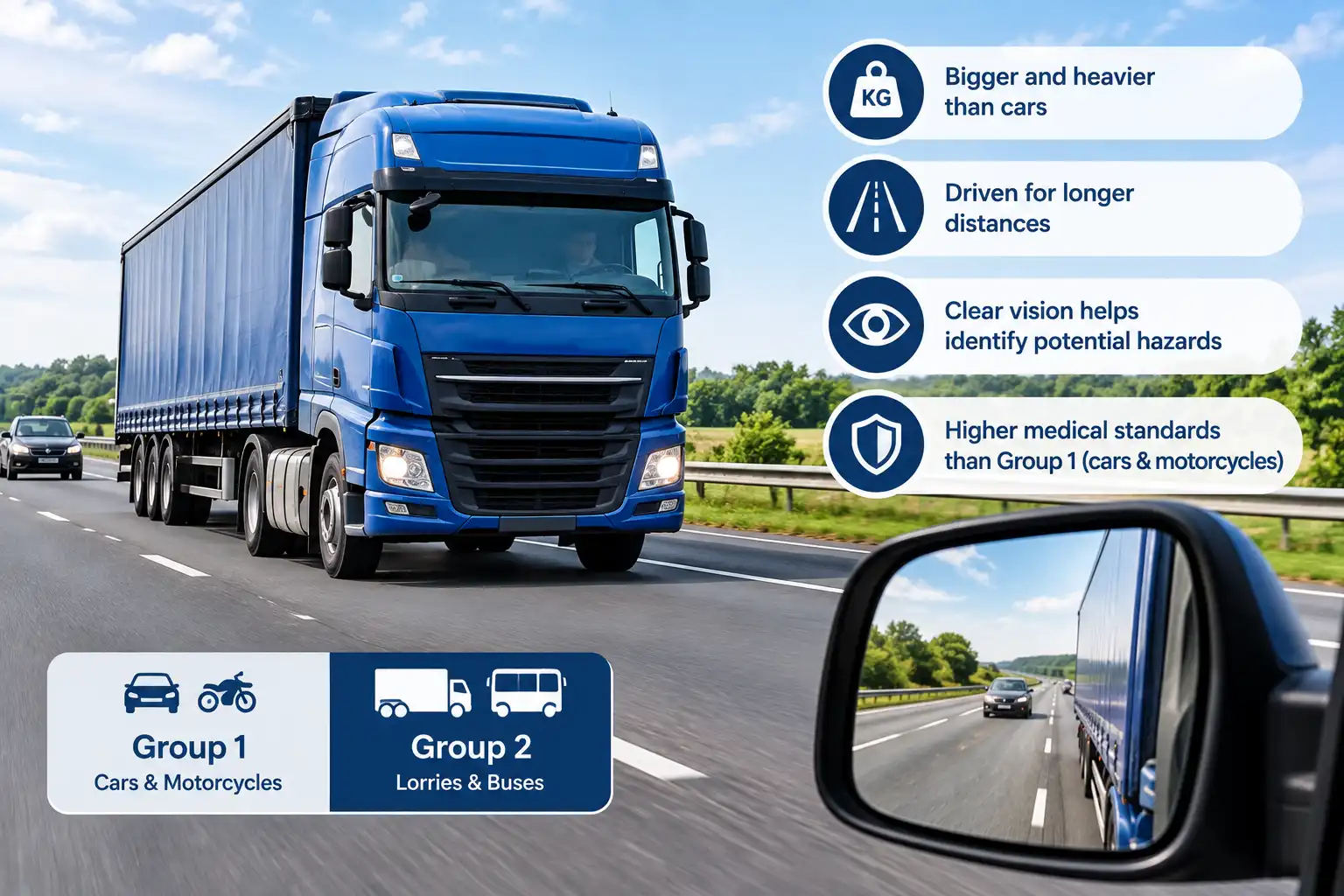
- HGVs are bigger/heavier than cars and are driven for longer distances.
- Having clear vision allows a professional driver to identify potential hazards.
- Group 2 licensing therefore uses higher medical standards than Group 1 licensing.
- Group 1 covers cars and motorcycles, while Group 2 covers large lorries and buses. DVLA states that DVLA HGV eyesight requirements for Group 2 are higher than Group 1 standards.
This is why passing the eyesight test for your car licence does not mean that you automatically pass the Group 2 eyesight assessment for driving an HGV.
What are the DVLA HGV medical eyesight requirements?
The DVLA HGV eyesight requirements cover more than simply whether you can read a standard eye chart.
There are two important areas:
Visual acuity
Visual acuity (VA) is the ability to see something clearly and identify its details.
The current DVLA standard for Group 2 is:
- 6/7.5 in the better eye
- 6/60 in the poorer eye
Corrective contact lenses can be used where necessary. Glasses can also be used, subject to the DVLA requirements concerning corrective power.
Visual field
Your visual field is the area you can see while looking ahead without moving your eyes or head.
Group 2 drivers must meet a higher field-of-vision standard. The current requirement includes an uninterrupted horizontal field of at least 160 degrees, with extensions of at least 70 degrees to each side and 30 degrees above and below the horizontal.
There must also be no defect within the central 30-degree area, subject to the specific rules set out by DVLA.
A visual field problem does not always have the same outcome in every case. DVLA guidance contains specific provisions for certain conditions and circumstances. A driver should not assume that a particular eye condition automatically means they cannot hold a Group 2 licence.
What Eyesight Is Checked During an HGV Medical?
An HGV medical assesses several aspects of a driver’s health. Eyesight forms an important part of the assessment, including the relevant HGV vision standards.
The main areas that can be relevant include:
- Visual acuity.
- Corrected visual acuity.
- Use of glasses or contact lenses.
- Visual field.
- Certain visual disorders.
- Any symptoms or conditions that could affect safe driving.
A standard medical does not mean every driver automatically receives a specialist eye examination. If an issue requires further investigation, the driver may be asked to obtain additional information or assessment.
What Are the Group 2 Eyesight Requirements?

The Group 2 eyesight requirements apply to HGV, LGV, bus, and coach drivers. They are stricter than the eyesight standards for car and motorcycle drivers.
For Group 2 drivers, the current DVLA standard includes:
- 6/7.5 visual acuity in the better eye.
- 6/60 visual acuity in the poorer eye.
- Meeting the required visual field standard.
These are the legal Group 2 eyesight requirements for Group 2 (professional) licence holders. These may change, so always check the latest DVLA guidance on eyesight standards for Group 2 and lorry driver eyesight requirements.
Do You Need a D4 Medical Eyesight Test?
Yes. Eyesight is tested as part of a D4 medical for Group 2 drivers. The HGV medical eye test records your eyesight and whether you require glasses or contact lenses for driving.
This records your eyesight and whether you require glasses or contact lenses for driving. If you fail this, you may be required to be retested by an optician.
If you wear glasses or contact lenses, make sure you bring the correction that you would wear for driving to your D4 medical.
What Happens If My Eyesight Doesn't Meet the Standard?
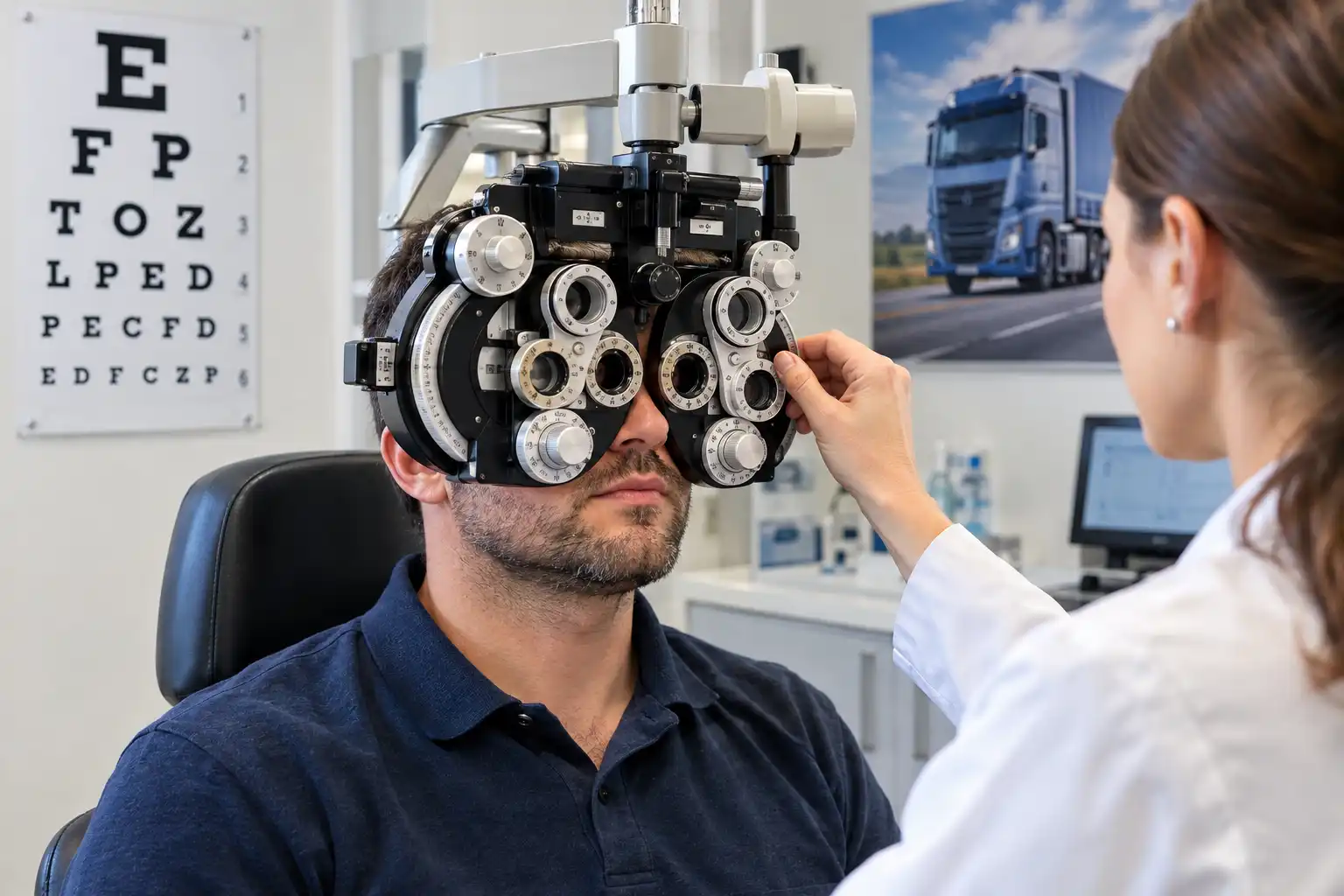
If your eyesight does not meet the required standard, it does not always mean it’s a permanent issue.
It all depends on what the problem is. A driver may therefore need to:
- Have their eyesight tested by an optometrist.
- Have any needed changes made to their glasses or contact lens prescription.
- Obtain any further information requested for the licensing assessment.
- Follow the relevant DVLA process where a medical or visual condition needs to be reported.
Do not assume that a failed screening measurement automatically means you can never drive an HGV. The licensing outcome depends on the applicable DVLA vision standards and the individual circumstances.
The Group 2 vision standards also apply when assessing the eyesight requirements for professional drivers.
When Should HGV Drivers Have Their Eyesight Checked?
You should not wait for your medical if you notice changes in your vision. Arrange an eye test if you experience:
- Blurred or reduced vision.
- Difficulty reading road signs.
- Poor night vision.
- Changes in peripheral vision.
- Double vision.
- Problems with your glasses or contact lenses.
Regular eye tests can help identify vision changes early and ensure you continue to meet the HGV vision standards.
HGV Eyesight Requirements: Quick Checklist
Before your HGV or D4 medical, keep these points in mind:
- HGV and LGV drivers are generally covered by Group 2 medical standards.
- Group 2 eyesight standards are higher than Group 1 standards.
- The current visual acuity standard is 6/7.5 in the better eye and 6/60 in the poorer eye.
- Corrective contact lenses can be used where needed.
- Glasses used to meet the minimum standard are subject to DVLA’s corrective-power limit.
- Group 2 drivers must also meet a higher visual field standard.
- Bring the glasses or contact lenses you use for driving to your medical appointment.
- If you have noticed a change, an eye examination is recommended.
- If your eyesight is not good enough, additional tests may be required.
Make sure you follow the latest advice from the DVLA, as medical and form requirements can change.
Frequently Asked Question
1: What eyesight do you need for an HGV licence?
A: For current Group 2 licensing, you need at least 6/7.5 visual acuity in the better eye and 6/60 in the poorer eye. You must also meet the Group 2 vision standards for visual field requirements. Corrective lenses can be used where permitted.
2: What are the DVLA HGV eyesight requirements?
A: The DVLA HGV eyesight requirements are minimums for visual acuity and visual fields. Group 2 drivers require 6/7.5 in the better eye and 6/60 in the poorer eye, together with the applicable Group 2 field-of-vision standard.
3: Can we wear glasses for an HGV medical?
A: Yes. Glasses can be used to meet the required visual standard, subject to the DVLA rules. The current guidance states that where glasses are worn to meet the minimum standard, their corrective power must not exceed +8 dioptres in any meridian of either lens.
4: Is eyesight checked during a D4 medical?
A: Yes. Vision is included in the D4 medical examination. The current D4 form documents the visual acuity for each of the eyes and asks whether the driver uses corrective lenses for driving. Further evaluation may be needed if the standard is not met.
5: What are the Group 2 vision standards?
A: The Group 2 vision standards are higher than the standards for ordinary car and motorcycle drivers. They include a higher visual acuity requirement and a more demanding visual field standard for bus and lorry drivers.
6: Can poor eyesight stop us from getting an HGV licence?
A: Yes, eyesight that does not meet the applicable Group 2 standard can affect licensing. However, the outcome depends on the specific visual findings and the relevant DVLA rules. Some situations may require further assessment rather than an immediate final decision.
Getting Ready for Your HGV Medical
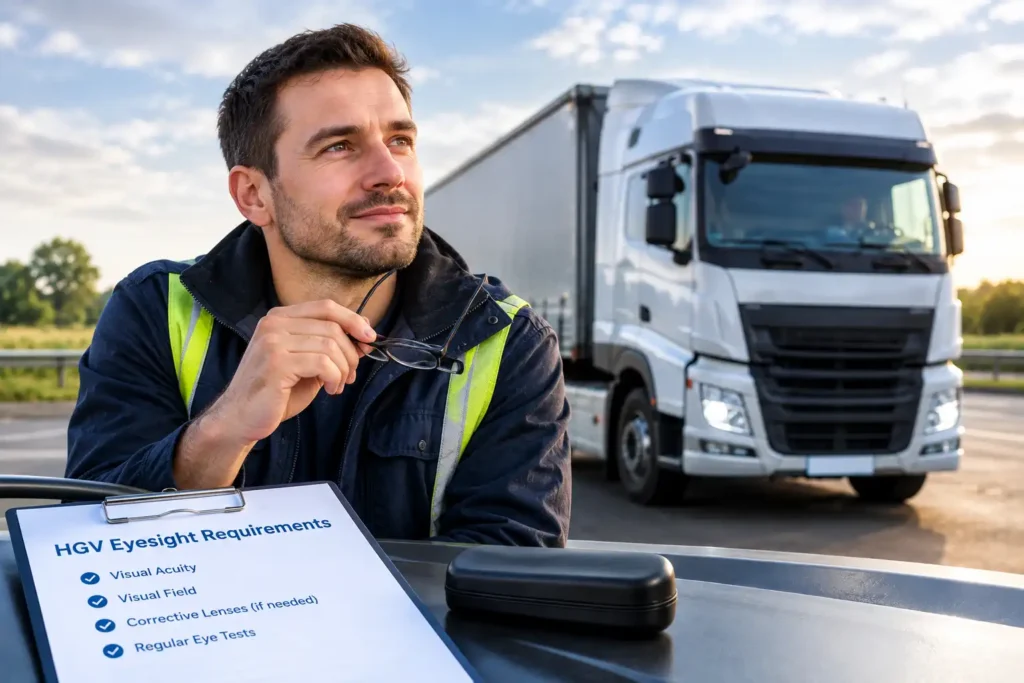
Make sure to bring either the glasses or contact lenses you use to drive for your D4 medical. If you have a new prescription, keep it with you.
If your eyesight has changed, or you are worried that you will not meet the Group 2 standard, see an optometrist before your medical. Understanding the HGV driver eyesight requirements can also help you prepare.
Driver Medical Test provides HGV and D4 medicals for UK professional drivers, including the vision checks required for the D4 form. They also offer unlimited free retests within 3 months.
Check your eyesight regularly and review the latest DVLA guidance before your application or renewal.
