


If you’re applying for or renewing a London taxi or private hire licence, you may need a medical assessment. Knowing the TfL taxi medical requirements beforehand can make the process easier. You’ll know what to expect and what information to bring.
TfL requires drivers to meet the relevant medical standards. The assessment checks your overall fitness to drive. This includes your eyesight and any health conditions that could affect safe driving. The relevant DVLA Group 2 standards also apply.
This guide from Driver Medical Test explains what an expert TfL private hire medical involves and who needs one. It also covers what is checked, what documents to bring, and what happens after your assessment.
What Is a TfL Taxi Medical?
A TfL taxi medical checks whether you’re medically fit to hold a London taxi or private hire driver’s licence. It helps assess your fitness to drive safely.
For the 2026 process, TfL’s TPH/204 Medical Declaration says the medical should be completed by a registered medical practitioner. The doctor should also have access to your full medical records. The practitioner must also carry out a physical examination.
The assessment uses the DVLA Group 2 medical standard as the relevant benchmark. This medical is not simply a routine health check. The doctor considers whether your health could affect your ability to drive safely.
TfL Taxi Medical Requirements 2026

The main requirement is that TfL is satisfied that you are medically fit to hold a Taxi or Private Hire driver’s licence.
The current TPH/204 form, dated June 2026, requires the medical practitioner to:
- Have access to your full medical records.
- Carry out a physical examination in person.
- Assess the relevant medical conditions indicated on the form.
- Follow the DVLA guidance in relation to fitness to drive.
- Provide any relevant medical reports or supporting information as may be required.
- Confirm their GMC registration and details.
The form covers different areas of your health. This includes your heart, eyesight, diabetes, mental health and other conditions that could affect your ability to drive.
TfL may need to ask for more information before they decide whether you meet the medical standards for driving.
TfL medical requirements can change.
Medical standards are reviewed and updated by the DVLA. The fitness-to-drive guidance is updated when needed to reflect changes in medical knowledge and driving standards. The latest update was published in November 2025.
Before your appointment, check the latest TfL guidance and make sure you have the correct medical form. This helps you avoid delays or having to repeat the assessment.
Who Needs a TfL Medical?
- New taxi and private hire applicants may need to provide medical evidence as part of their TfL licensing process.
- Existing private hire drivers may need a medical examination when renewing their licence from age 45.
- Private hire drivers aged 65 and over may need to complete a medical examination every year.
- TfL can also request a medical assessment at other times if it needs to confirm a driver’s physical fitness.
- The exact requirement can depend on your licence type, age, previous medical information and individual circumstances.
- Some drivers may not need to complete a new TPH/204 medical form if they already hold a valid DVLA Group 2 licence or are already TfL-licensed and applying for the other licence.
- TfL may require a medical assessment if they need to confirm age-related fitness or any other medical requirements.
- If TfL asks you to attend a medical examination, ensure that you correctly complete the medical form, which is incorporated into your application or renewal, and take it with you to the examination.
What Does a TfL Taxi Medical Check?
An expert TfL private hire medical checks whether your health meets the relevant medical standard for vocational driving.
The current TPH/204 form covers:
- Heart and cardiovascular conditions
- Blood pressure
- Musculoskeletal problems and physical disabilities
- Diabetes
- Seizures and epilepsy
- Blackouts or loss of consciousness
- Stroke and TIA
- Dizziness and vertigo
- Sleep disorders
- Neurological conditions
- Vision
- Psychiatric conditions
- Alcohol or substance misuse
- Other medical conditions that could affect driving
The doctor will review your medical history and may need supporting reports for certain conditions.
Eyesight Requirements for London Taxi and Private Hire Drivers
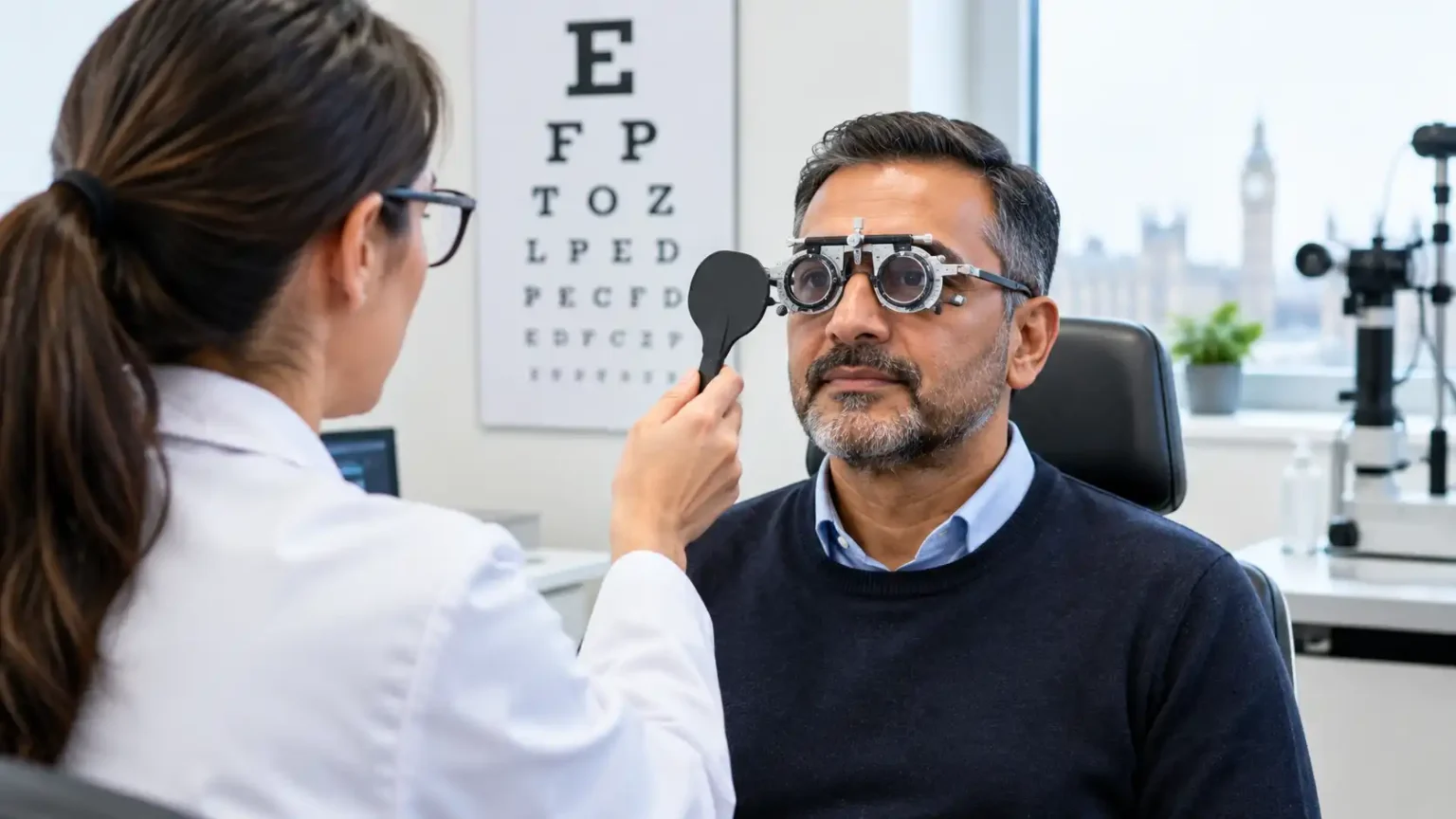
Vision is an important part of the TfL medical assessment. The doctor checks your eyesight against the relevant medical standards to make sure you meet the requirements for professional driving.
The assessment also considers:
- Visual acuity.
- Field of vision.
- Double vision.
- Other relevant eye conditions.
- The use of glasses or contact lenses.
Bring any glasses or contact lenses that you normally wear, so that your vision can be tested while you are wearing them.
What Documents Should You Take to Your Medical?
Before booking your London taxi medical, check the instructions supplied by TfL and the medical provider.
Useful items to prepare include:
- The TfL medical form, if TfL has issued one.
- Photo identification.
- Details of your registered NHS GP.
- FULL Medical Records (You can get these from your GP)
- A list of current medications.
- Details of relevant medical conditions.
- Contact details for specialists involved in your care.
- Recent medical reports, where relevant.
- Your glasses or contact lenses.
- Any other documents specifically requested by TfL or the medical provider.
The TPH/204 form asks for your registered NHS GP details and requires the medical practitioner to have access to your full medical records.
Do not fail to report a medical condition no matter how trivial or unrelated you think it is. You must provide accurate details about any medical conditions. Giving false or incomplete information could affect your licence application.
What Happens During a TfL Taxi Medical?

A medical assessment follows a structured process to assess your fitness to drive:
- Medical history review: The doctor reviews your medical history, medication, and existing conditions.
- Physical examination: The doctor carries out the required health checks.
- Blood pressure check: Your blood pressure is checked as part of the assessment.
- Vision assessment: Your eyesight is assessed against the relevant driving standards.
- Medical conditions: The doctor discusses any conditions that may affect your ability to drive safely.
- Medical records: The doctor must have access to your full medical records.
- Further information: Additional reports may be requested if more evidence is needed.
- TfL medical form: The doctor completes the relevant TfL medical declaration based on the assessment.
TfL Medical and Existing Health Conditions
- Having a medical condition does not necessarily prevent you from getting or renewing a taxi or private hire licence.
- The doctor will consider what effect your condition may have on your driving capability.
- You should tell them accurately what medical condition you have and what drugs you are taking.
- Recent reports from any consultant or hospital can also be useful if they need more information later.
- TfL may request additional medical evidence before making a licensing decision.
- Being honest about your medical history. It helps the doctor complete your TfL medical assessment correctly.
How Much Does a Taxi Medical Cost in London?
The cost of a TfL taxi medical varies between providers and depends on the assessment you need. TfL does not have a standard price for any medical appointment.
Before you book an appointment, check what is included and if there are any additional charges for reports or other assessments.
A low price does not always include all aspects of an individual medical assessment, so check what is included in the appointment.
How to Prepare for a TfL Medical?
Good preparation can make your appointment easier.
Before attending:
- Check your TfL paperwork. Make sure you have the correct medical form and understand what TfL has asked you to provide.
- Prepare your medical history. Make a list of relevant diagnoses, treatment, and previous procedures.
- Bring medication details. Include the names and doses of regular medicines.
- Take your glasses or contact lenses. You may need them for the vision assessment.
- Gather supporting reports. Bring relevant consultant, hospital, or specialist information if you have it.
- Be accurate. Give the doctor complete and honest information about your health.
- Allow enough time. More complex medical histories may need additional discussion or evidence.
The DVLA advises that its guidance on fitness to drive is regularly reviewed. Therefore, do not rely on out-of-date advice from another driver or a medical form that is not up-to-date.
What Happens After the Medical?
- Submit your form: Follow TfL’s instructions to submit the completed medical form.
- Keep a copy: Keep a copy of your completed form for your records.
- TfL reviews your medical: TfL considers the medical information as part of your licensing process.
- Further information: TfL may ask for additional medical reports or evidence if needed.
- Medical issue: A medical concern does not always mean your application ends. You may need further assessment or supporting information.
How to Book a TfL Taxi Medical in London?
If TfL has asked you to complete a medical, first check your application or renewal instructions to confirm which form and assessment you need.
Before booking:
- Check that the medical provider carries out TfL taxi or private hire medicals.
- Have your TfL medical form ready, if one was provided.
- Prepare your GP details, medication list and relevant medical history.
- Ask the provider what documents you need to bring.
- Confirm the appointment cost and what is included.
Driver Medical Test provides TfL taxi medical and private hire medical appointments in London. The medical includes an eye test, with unlimited free retests within 3 months if you fail the initial medical.
Book your appointment with Driver Medical Test when you are ready to complete your TfL medical.
Frequently Asked Question
1: How often do I need a TfL taxi medical?
A: The frequency depends on your licence and circumstances. For private hire drivers, TfL’s policy states that medical examinations are required on renewal from age 45 and annually from age 65. TfL can also request medical examinations at other times.
2: What does a TfL medical include?
A: It includes a review of your medical history, a physical examination, and an assessment of relevant areas such as cardiovascular health, diabetes, neurological conditions, musculoskeletal health, and vision. The assessment follows the relevant Group 2 medical standard.
3: Do I need an eye test for a TfL medical?
A: Vision forms part of the TPH/204 assessment. The form sets specific visual acuity and field-of-vision requirements and allows the doctor to refer you to an optician or optometrist where necessary.
4: What documents do I need for a TfL taxi medical?
A: Take the TfL medical form if one has been issued, your identification, details of your GP, medication information, and relevant medical reports. If you use glasses or contact lenses, bring these with you. You must follow the specific instructions given with your TfL application.
5: Can I have a TfL medical if I have an existing medical condition?
A: Yes, an existing condition does not automatically prevent you from being assessed. The doctor will assess the condition against the applicable medical standards and may request supporting information if needed.
6: How long does a taxi medical take?
A: A TfL medical takes around 15–20 minutes in a straightforward case. If you have several medical conditions or need additional reports, the appointment may take longer.
7: How much does a TfL taxi medical cost?
A: TfL does not set one universal fee for every medical provider. The TPH/204 form states that applicants are responsible for the medical practitioner’s fee.
Conclusion

A TfL medical does not need to be a daunting part of applying for or renewing your London taxi or private hire licence. Knowing what to expect and bringing the right documents and medical information can help your appointment run smoothly.
The most important step is to ensure you know the latest TfL taxi medical requirements. Make sure you know which form you need, what the medical covers, and whether you need to bring any extra medical reports or information.
If you need a TfL taxi medical in London, Driver Medical Test provides appointments for taxi and private hire drivers. Our team can help you understand what to bring and complete the required medical assessment.
Ready to arrange your medical? Book your appointment with Driver Medical Test and take the next step towards completing your TfL licensing requirements.
